IceCube catches ghost particles with 10 billion times the energy of solar neutrinos
IceCube catches ghost particles with 10 billion times the energy of solar neutrinos
IceCube catches ghost particles with 10 billion times the energy of solar neutrinos
Key points
اہم نکات
मुख्य बातें
- The IceCube Neutrino Observatory, buried in about a cubic kilometre of Antarctic ice at the South Pole, detects some of the rarest and most energetic particles in the universe.
- These cosmic neutrinos, often called ghost particles because they pass through the Earth and the human body almost unhindered, can carry roughly 10 billion times the energy of a typical neutrino from the Sun.
- Only a few dozen of the most energetic examples are caught each year.
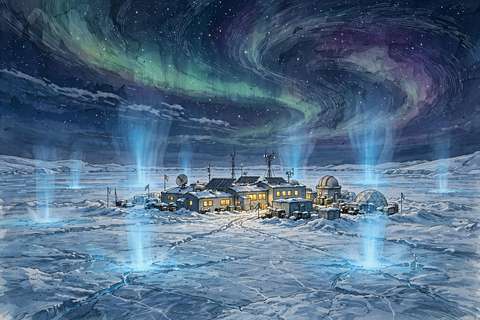
The IceCube Neutrino Observatory, buried in about a cubic kilometre of Antarctic ice at the South Pole, detects some of the rarest and most energetic particles in the universe. These cosmic neutrinos, often called ghost particles because they pass through the Earth and the human body almost unhindered, can carry roughly 10 billion times the energy of a typical neutrino from the Sun. Only a few dozen of the most energetic examples are caught each year. When one interacts with the ice it creates charged particles that give off faint blue flashes, known as Cherenkov radiation, which scientists use to estimate its energy and trace its direction. The origin of the most extreme of these particles is still unknown. The work is linked to this year's Nobel Prize in Physics, awarded for the IceCube observatory and the discovery of high-energy neutrinos from space.
The IceCube Neutrino Observatory, buried in about a cubic kilometre of Antarctic ice at the South Pole, detects some of the rarest and most energetic particles in the universe. These cosmic neutrinos, often called ghost particles because they pass through the Earth and the human body almost unhindered, can carry roughly 10 billion times the energy of a typical neutrino from the Sun. Only a few dozen of the most energetic examples are caught each year. When one interacts with the ice it creates charged particles that give off faint blue flashes, known as Cherenkov radiation, which scientists use to estimate its energy and trace its direction. The origin of the most extreme of these particles is still unknown. The work is linked to this year's Nobel Prize in Physics, awarded for the IceCube observatory and the discovery of high-energy neutrinos from space.
The IceCube Neutrino Observatory, buried in about a cubic kilometre of Antarctic ice at the South Pole, detects some of the rarest and most energetic particles in the universe. These cosmic neutrinos, often called ghost particles because they pass through the Earth and the human body almost unhindered, can carry roughly 10 billion times the energy of a typical neutrino from the Sun. Only a few dozen of the most energetic examples are caught each year. When one interacts with the ice it creates charged particles that give off faint blue flashes, known as Cherenkov radiation, which scientists use to estimate its energy and trace its direction. The origin of the most extreme of these particles is still unknown. The work is linked to this year's Nobel Prize in Physics, awarded for the IceCube observatory and the discovery of high-energy neutrinos from space.
Most read
سب سے زیادہ پڑھی گئی
सबसे ज़्यादा पढ़ी गई
- Loading...
Get news in your inbox
خبریں اپنے ان باکس میں حاصل کریں
खबरें अपने इनबॉक्स में पाएं
One email when new stories are published. No spam, unsubscribe anytime.
نئی خبریں شائع ہونے پر ایک ای میل۔ کوئی سپیم نہیں، کسی بھی وقت ان سبسکرائب کریں۔
नई खबरें प्रकाशित होने पर एक ईमेल। कोई स्पैम नहीं, कभी भी अनसब्सक्राइब करें।