Ancient asteroid samples hold all five genetic letters of DNA and RNA
Ancient asteroid samples hold all five genetic letters of DNA and RNA
Ancient asteroid samples hold all five genetic letters of DNA and RNA
Key points
اہم نکات
मुख्य बातें
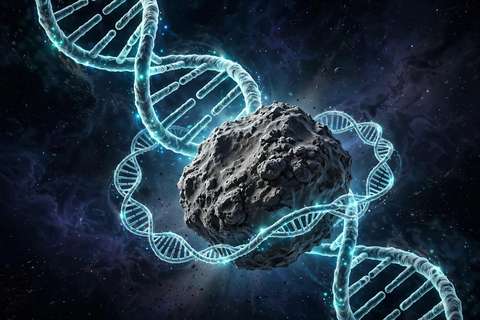
- Samples from the asteroid Ryugu, brought back to Earth by Japan's Hayabusa2 spacecraft in 2020, contain all five nucleobases — adenine, guanine, cytosine, thymine and uracil — the chemical letters that carry genetic information in DNA and RNA.
- It is the first time the full set has been found together in Ryugu material in roughly equal amounts, after an earlier analysis of the same samples found only uracil.
- Researchers say the result supports the idea that the ingredients for life could have formed in space and been widespread in the early solar system, which is about 4.5 billion years old.
Samples from the asteroid Ryugu, brought back to Earth by Japan's Hayabusa2 spacecraft in 2020, contain all five nucleobases — adenine, guanine, cytosine, thymine and uracil — the chemical letters that carry genetic information in DNA and RNA. It is the first time the full set has been found together in Ryugu material in roughly equal amounts, after an earlier analysis of the same samples found only uracil. Researchers say the result supports the idea that the ingredients for life could have formed in space and been widespread in the early solar system, which is about 4.5 billion years old. Lead author Toshiki Koga cautioned that this does not mean life existed on Ryugu, only that primitive asteroids could make and preserve molecules important for the origin of life. A full set of the same letters was also found in samples from the asteroid Bennu in 2025.
Samples from the asteroid Ryugu, brought back to Earth by Japan's Hayabusa2 spacecraft in 2020, contain all five nucleobases — adenine, guanine, cytosine, thymine and uracil — the chemical letters that carry genetic information in DNA and RNA. It is the first time the full set has been found together in Ryugu material in roughly equal amounts, after an earlier analysis of the same samples found only uracil. Researchers say the result supports the idea that the ingredients for life could have formed in space and been widespread in the early solar system, which is about 4.5 billion years old. Lead author Toshiki Koga cautioned that this does not mean life existed on Ryugu, only that primitive asteroids could make and preserve molecules important for the origin of life. A full set of the same letters was also found in samples from the asteroid Bennu in 2025.
Samples from the asteroid Ryugu, brought back to Earth by Japan's Hayabusa2 spacecraft in 2020, contain all five nucleobases — adenine, guanine, cytosine, thymine and uracil — the chemical letters that carry genetic information in DNA and RNA. It is the first time the full set has been found together in Ryugu material in roughly equal amounts, after an earlier analysis of the same samples found only uracil. Researchers say the result supports the idea that the ingredients for life could have formed in space and been widespread in the early solar system, which is about 4.5 billion years old. Lead author Toshiki Koga cautioned that this does not mean life existed on Ryugu, only that primitive asteroids could make and preserve molecules important for the origin of life. A full set of the same letters was also found in samples from the asteroid Bennu in 2025.
Most read
سب سے زیادہ پڑھی گئی
सबसे ज़्यादा पढ़ी गई
- Loading...
Get news in your inbox
خبریں اپنے ان باکس میں حاصل کریں
खबरें अपने इनबॉक्स में पाएं
One email when new stories are published. No spam, unsubscribe anytime.
نئی خبریں شائع ہونے پر ایک ای میل۔ کوئی سپیم نہیں، کسی بھی وقت ان سبسکرائب کریں۔
नई खबरें प्रकाशित होने पर एक ईमेल। कोई स्पैम नहीं, कभी भी अनसब्सक्राइब करें।